How Many Cushions Does Your Sofa Really Need? A Complete Size-Wise Guide
- Logistic throwpillow
- Feb 5
- 4 min read

Choosing the right number of cushions for a sofa is a common question in interior design. The number of cushions affects comfort, style, and the overall balance of a living room. This guide explains how many cushions a sofa needs based on its size, shape, and use. It also considers practical aspects relevant to homes with limited space, such as metro apartments or compact Indian living rooms.
Why Cushion Count Matters for Sofas
Cushions add comfort and visual interest to a sofa. Too few cushions can make a sofa look bare and uncomfortable. Too many cushions can clutter the seating area and reduce usable space. The right number of cushions creates a welcoming, balanced look and supports comfortable seating.
Cushion count also influences how a sofa fits into a room’s layout. In smaller homes, every inch counts. Cushions that are too large or too many can overwhelm a compact living room. In larger spaces, cushions can help fill empty areas and add warmth.


Cushion Guidelines for Different Sofa Sizes
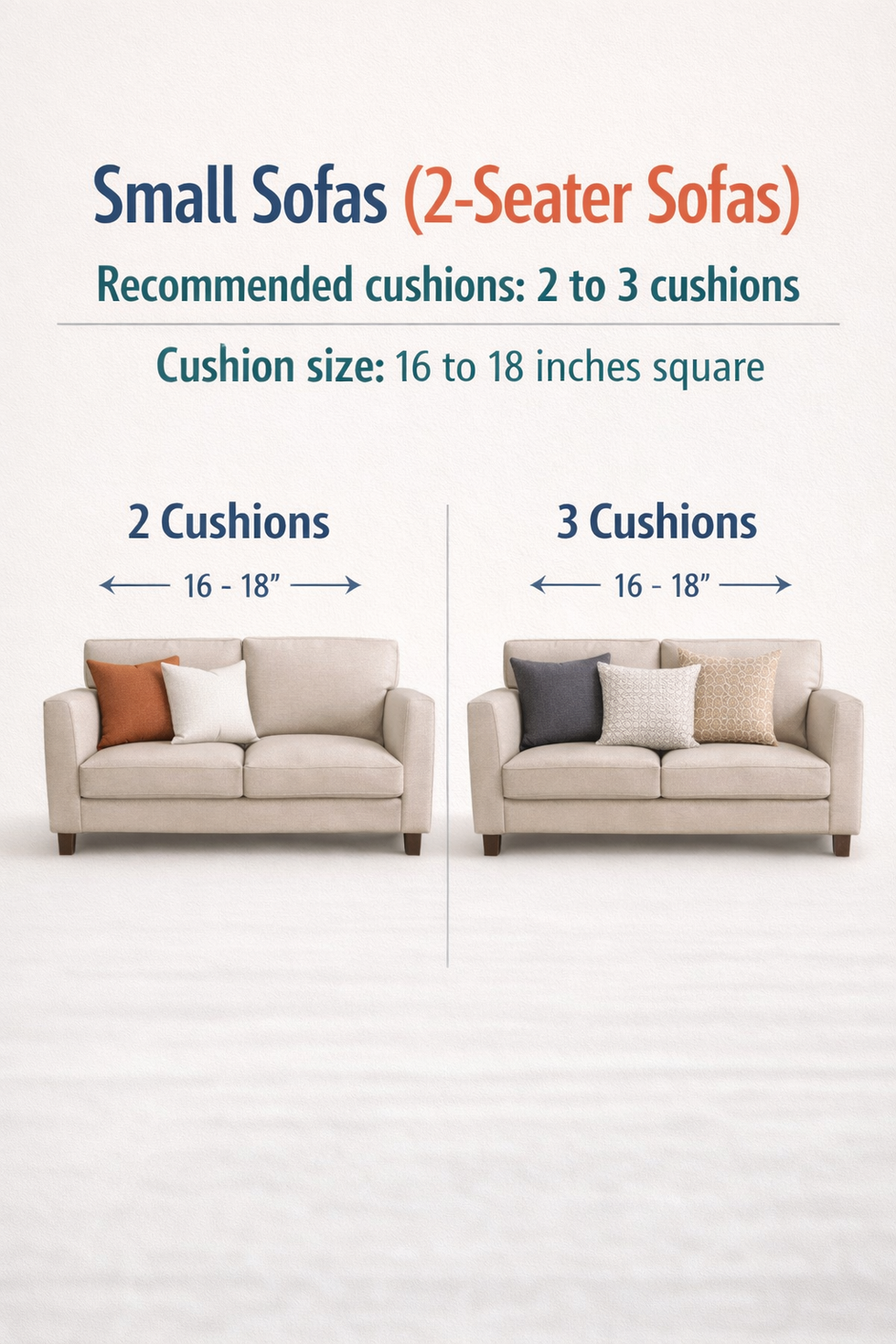
Small Sofas (2-Seater Sofas)
Small sofas typically measure around 48 to 72 inches in length. These sofas are common in apartments and smaller living rooms.
Recommended cushions: 2 to 3 cushions
Cushion size: 16 to 18 inches square
Why this matters: Two cushions provide enough support without overcrowding the seating area. Adding a third cushion can create a layered look but avoid more than three to keep the sofa functional.
Small sofas benefit from cushions that are not too large. Oversized cushions reduce seating space and make the sofa look cramped. Choose cushions with firm filling to maintain shape and support.

Medium Sofas (3-Seater Sofas)
Medium sofas usually range from 72 to 90 inches in length. These sofas are common in family living rooms and larger apartments.
Recommended cushions: 4 to 5 cushions
Cushion size: 18 to 20 inches square
Why this matters: Four cushions evenly spaced provide balanced comfort and style. Five cushions can add a casual, inviting feel but avoid more than five to prevent clutter.
For medium sofas, mixing cushion sizes can add depth. For example, two larger cushions paired with three smaller ones create visual interest and comfort. This approach suits living rooms with moderate space, such as urban flats.


Large Sofas (Sectionals and 4-Seater Sofas)
Large sofas often exceed 90 inches and include sectional sofas with multiple seating sections.
Recommended cushions: 6 to 8 cushions
Cushion size: 20 to 22 inches square or a mix of sizes
Why this matters: Larger sofas need more cushions to fill the space and maintain comfort. Sectionals especially benefit from a mix of cushions to define different seating zones.
In spacious living rooms, such as those in larger homes or open-plan apartments, cushions can help soften the sofa’s scale. Use a combination of square and rectangular cushions to support different seating postures.


Cushion Placement and Arrangement Tips
Symmetry creates formality: Even numbers of cushions arranged symmetrically suit traditional or formal living rooms.
Asymmetry adds casual style: Odd numbers and varied sizes create a relaxed, layered look.
Corner cushions for sectionals: Place larger cushions at corners to support lounging.
Mix textures and fabrics: Combining velvet, linen, or cotton cushions adds tactile interest without increasing cushion count.
Consider cushion depth: Thicker cushions add comfort but reduce seating space.
Cushion Types and Their Impact on Sofa Use
Back cushions: Provide support for sitting upright. Usually firmer and larger.
Throw cushions: Smaller, decorative cushions that add softness and style.
Bolster cushions: Cylindrical cushions that support arms or necks, useful on sectionals.
Choosing the right mix of cushion types depends on how the sofa is used. In Indian homes where floor seating is common, sofas may serve as occasional seating, so fewer cushions might be preferred for easy cleaning and flexibility.
Cushion Size and Fabric Choices for Different Climates
In humid climates, such as many Indian cities, cushion fabrics should be breathable and easy to clean. Cotton and linen covers work well. Avoid heavy fabrics that trap moisture.
In cooler climates or air-conditioned homes, velvet or wool cushions add warmth and comfort. Cushion size should complement the sofa without overwhelming the space, especially in compact metro apartments.
How Cushion Count Affects Living Room Layout
Cushions influence how much seating space is available. Too many cushions reduce usable seating, which matters in small living rooms. Cushions also affect visual balance. A sofa with too few cushions can look sparse, while too many cushions can make the sofa dominate the room.
When planning cushion count, consider:
Sofa length and depth
Room size and layout
Frequency of sofa use (daily seating vs. occasional)
Cleaning and maintenance needs
Practical Examples of Cushion Counts by Sofa Size
A 2-seater sofa in a Mumbai apartment: 2 cushions, 16 inches square, cotton fabric for breathability.
A 3-seater sofa in a Delhi living room: 4 cushions, mix of 18 and 20 inches, linen and velvet covers for texture.
A large sectional in a Bangalore home: 7 cushions, mix of square and bolster cushions, easy-to-clean fabric blends.
Final Thoughts on Sofa Cushion Numbers
The number of cushions a sofa needs depends on size, use, and room context. Small sofas require fewer cushions to maintain comfort and space. Larger sofas benefit from more cushions to fill the area and support different seating positions. Cushion size, fabric, and arrangement also influence the sofa’s function and style.


Comments