Table Runner Size Guide for Indian Dining Tables
- www.throwpillow.in
- Jan 26
- 4 min read

Choosing the right table runner can transform your dining experience and enhance the look of your Indian dining table. Whether you have a 6-seater wooden table or a smaller glass one, the size and style of your table runner play a crucial role in balancing aesthetics and functionality. This guide covers everything you need to know about selecting the perfect table runner size and placement, with practical tips tailored for Indian dining tables.

What Size Table Runner Works Best for a 6-Seater Dining Table?
A 6-seater dining table typically measures around 72 to 90 inches in length. For such tables, a table runner between 72 and 90 inches long works best. The exact length depends on how much overhang you prefer on each side.
Ideal overhang: 6 to 12 inches beyond the table edge on both ends.
Why this matters: A runner that is too short looks unfinished, while one that is too long can interfere with seating and movement.
For example, if your table is 72 inches long, a runner of about 84 inches will give you a 6-inch overhang on each side, creating a balanced look without excess fabric hanging awkwardly.
How Much Should a Table Runner Hang?

The overhang or "hang" of a table runner is the length of fabric that extends beyond the table edges. The ideal hang:
Frames the table visually without touching chairs.
Avoids interfering with guests sitting down or getting up.
Adds elegance without clutter.
For Indian dining tables, which often have intricate woodwork or carvings, a moderate overhang of 6 to 8 inches works well to highlight the table’s craftsmanship while protecting the surface.
Table Runner Length Guide for Different Table Sizes
| Table Size | Runner Length (inches) | Recommended Overhang (inches) |
|---------------------|------------------------|-------------------------------|
| Small tables (4-seater) | 48 - 60 | 4 - 6 |
| Medium tables (6-seater) | 72 - 90 | 6 - 12 |
| Large tables (8+ seater) | 96 - 108 | 8 - 12 |
Smaller tables benefit from shorter runners with minimal overhang to maintain proportion and avoid visual clutter. Larger tables allow for longer runners that create a grander effect.
Table Runner Size for Bedside Tables
For bedside tables, smaller runner sizes work best to maintain a clean, well-balanced look. 14 × 26 inches and 14 × 34 inches are ideal dimensions for compact and standard bedside tables. These sizes sit neatly on the tabletop without overpowering the space, allowing just enough coverage to add texture and style while keeping the setup practical for daily use.
Table Runner Size for Small Tables
Small dining tables, common in compact Indian homes or breakfast nooks, require runners that don’t overwhelm the space. A runner about 48 to 60 inches long with a 4 to 6-inch overhang is ideal. This keeps the table looking neat and proportionate.
Table Runner for Coffee Tables
Coffee tables usually have a different function and size compared to dining tables. Runners for coffee tables are:
Shorter and more decorative.
Used to soften the surface without covering the entire table.
Often made from lighter fabrics or with intricate patterns to add charm.
For example, a 36-inch coffee table might have a runner around 40 to 48 inches long, just enough to add style without bulk.

Table Runner for Wooden Dining Tables
Wooden dining tables are common in Indian homes, often featuring rich grains and detailed craftsmanship. Table runners on wooden tables serve two purposes:
Protection: They shield the surface from spills and scratches.
Highlighting: By leaving portions of the wood exposed, runners emphasize the natural beauty of the wood grain.
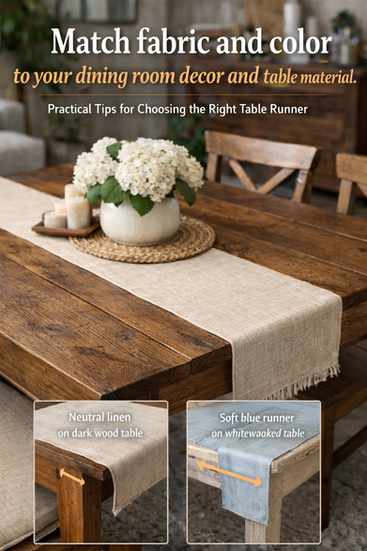
Choose runners made from natural fabrics like cotton or linen to complement the wood’s texture. Avoid runners that cover the entire table; instead, opt for ones that leave the edges visible.
Table Runner Placement Rules
Proper placement enhances the runner’s impact:
Place the runner centrally along the table’s length.
Align it with the table’s long axis for symmetry.
Ensure equal overhang on both ends.
Avoid placing runners too close to the table edges to prevent slipping.
This placement creates a balanced, inviting look that draws attention to the table’s centerpieces or decor.
Table runner vs placemats
Table runners and placemats serve different but complementary roles: Table runners define the table as a whole, adding a continuous decorative element. Placemats divide the table into individual settings, providing personal space and protection. Many Indian dining setups use both together. For example, a cotton runner can run down the center while colorful placemats mark each seat, combining style and function.

+
Table Runner for Glass Tables
Glass dining tables benefit greatly from table runners:
They reduce glare and reflections.
Add warmth and texture to an otherwise cold surface.
Protect the glass from scratches and spills.
Choose runners with non-slip backing or place a thin mat underneath to prevent sliding. Light-colored runners with subtle patterns work well to soften the glass look.

Dining Table Runner Proportions for Indian Tables
Indian dining tables often have unique dimensions and designs, requiring customized runner sizes. Brands like ThrowPillow.in offer tailored options that fit perfectly, considering:
Table length and width.
Seating arrangement.
Style and fabric preferences.
When selecting a runner, measure your table carefully and consider the runner’s width as well. A runner that is too narrow looks lost, while one too wide can cover too much of the table surface.
Practical Tips for Choosing the Right Table Runner


Measure your table before buying a runner.
Decide on overhang based on your seating and table style.
Match fabric and color to your dining room decor and table material.
Consider maintenance: cotton and linen are easy to wash, while silk or embroidered runners may need special care.
Use runners to highlight centerpieces like candles, flowers, or traditional Indian decor items.
Summary
Choosing the perfect table runner for your Indian dining table involves balancing size, style, and function. For a 6-seater table, aim for a runner between 72 and 90 inches long with a 6 to 12-inch overhang. Smaller tables need shorter runners, while coffee tables require decorative, shorter runners. Wooden tables benefit from runners that protect and highlight the wood, and glass tables gain warmth and reduced glare from runners. Proper placement and proportion ensure your table runner enhances your dining space beautifully.


Comments